R+AI 2026 Workshops
Where Does AI Fit in R Package Risk-Based Assessment?: A Working Session Toward a Community Whitepaper
Date & Time
Tuesday, November 10, 2026
3:40 PM - 4:40 PM Eastern (1 hour)
Format: Live workshop
Description
The R Validation Hub’s risk-based framework – evaluating R packages on purpose, maintenance practices, community usage, and testing – has become foundational for using R in regulated submissions. At the same time AI tooling has matured enough that some consider it is a plausible candidate for helping in some tasks such as assisting assessors in reviewing maintenance signals at scale, drafting or evaluating remediation tests, flagging changes across package versions.
AI also raises an issue in return: how should risk assessment treat packages or contributions that are themselves AI-generated or AI-assisted?
This workshop is designed to gather people with hands-on experience in R package validation, regulated environments, and applied AI tooling for a working discussion.
Where AI can realistically help within the existing framework
Where AI-assisted evaluation introduces new risks that would themselves need validation
What a minimal, practical pilot of AI- assisted risk assessment could look like
Session notes and points of consensus will be captured and used as the starting point for a community whitepaper
Topic: Evaluation, Observability, Responsible AI, and Governance
Ileana Saenz
R Validation Hub Working Group; Strategic Platform Lead for Life Sciences at Appsilon

Ileana is the Strategic Platform Lead for Life Sciences at Appsilon, where she guides the direction of the platform’s team offering for the industry. She brings more than 8 years in pharma and biotech and over 14 years of using R. As Vice Chair of the R Validation Hub, she supports the responsible, risk-based use of open-source software in regulated settings. Ileana believes science and research deserve environments and infrastructure that match their needs for reproducibility, traceability and innovation, and that open-source solutions are a massive part of getting there. Above all, she is passionate about giving researchers tools they can trust, build on and enjoy using.
Doug Kelkhoff
Chair, R Validation Hub; Product Lead, Life Sciences, Domino Data Lab

Doug brings 10 years of Pharma and open source experience, with a focus on the human and process questions that steer clinical delivery. He Chairs the R Validation Hub as part of the R Consortium, which advocates for responsible risk-based adoption of open source tools, which invites new questions in the era of AI regarding how we express trust in software. Doug is also the Product Lead for Life Science at Domino, where he applies this philosophy of trust, reproducibility and traceability to deliver a rigorous platform for GxP workloads. Above all, Doug’s passionate about fostering open-source software that empowers people, be that through collaboration, decision-making, scientific rigor, reproducibility or even just to make analysis fun.
From Lab to Production: Shipping R-Powered Drug Discovery Models as Apps on an Enterprise AI/Data Platform
Date & Time
Wednesday, November 11, 2026
12:35 PM - 1:35 PM Eastern (1 hour)
Format: Live tutorial
Description
Most machine learning models built in R for drug discovery never leave the researcher’s laptop. This talk is a case study of taking R-based models from exploratory lab code to a governed, production AI application on an enterprise data platform.
At the center is the R pipeline: reproducible data preprocessing, molecular feature engineering, model training, and scoring, packaged to run reliably against enterprise data. I’ll show how this pipeline is version-controlled, containerized, and served behind a Streamlit frontend so scientists can query predictions without touching code.
I’ll also cover the realities of shipping AI in a regulated domain: secure deployment, private or managed models that keep proprietary chemistry in-house, production monitoring, and cost control at scale. Attendees will leave with a concrete blueprint for operationalizing R machine learning, plus the practices that make R pipelines reproducible, auditable, and trusted in a regulated environment.
Topic: Production AI and Industry Case Studies
Chanin Nantasenamat, PhD
Lead Developer Advocate, Snowflake
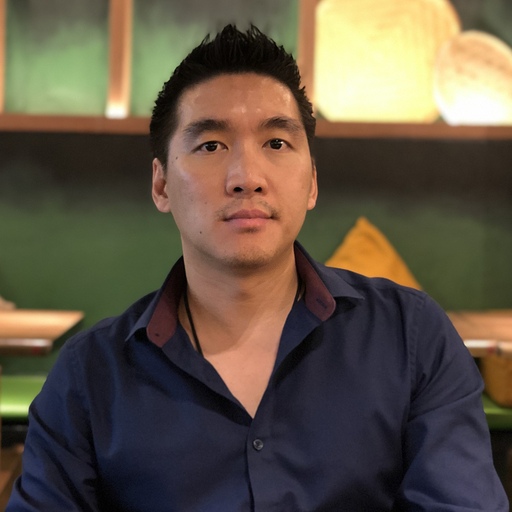
Chanin Nantasenamat, PhD is a Lead Developer Advocate at Snowflake, where he creates educational content on building data and AI applications with Streamlit and Snowflake. He recently co-developed the Coursera course “Fast Prototyping of GenAI Apps with Streamlit,” part of a DeepLearning.AI × Snowflake collaboration empowering developers to build GenAI applications. Chanin launched the social learning initiatives 30 Days of Streamlit and 30 Days of AI, which had helped introduced developers on building data and AI apps.
Before entering tech, Chanin was a full Professor of Bioinformatics, where he applied Python and R to computational drug discovery. He published extensively on machine learning research in this field, authoring 141 research articles, 21 review articles, and 6 book chapters. He has also presented at the R User Group at the Harvard Data Science Initiative.
Chanin is the creator of the Data Professor YouTube channel, with an audience of 220,000 subscribers. His 400+ videos (including dedicated playlists on R 101, R Data Science, and R Shiny) have earned over 10 million views. He has also created tutorials for the freeCodeCamp channel that amassed more than 2 million views. Together, his work bridges rigorous research, hands-on teaching, and a thriving open-source community.